


Which Marketing Metrics Matter?
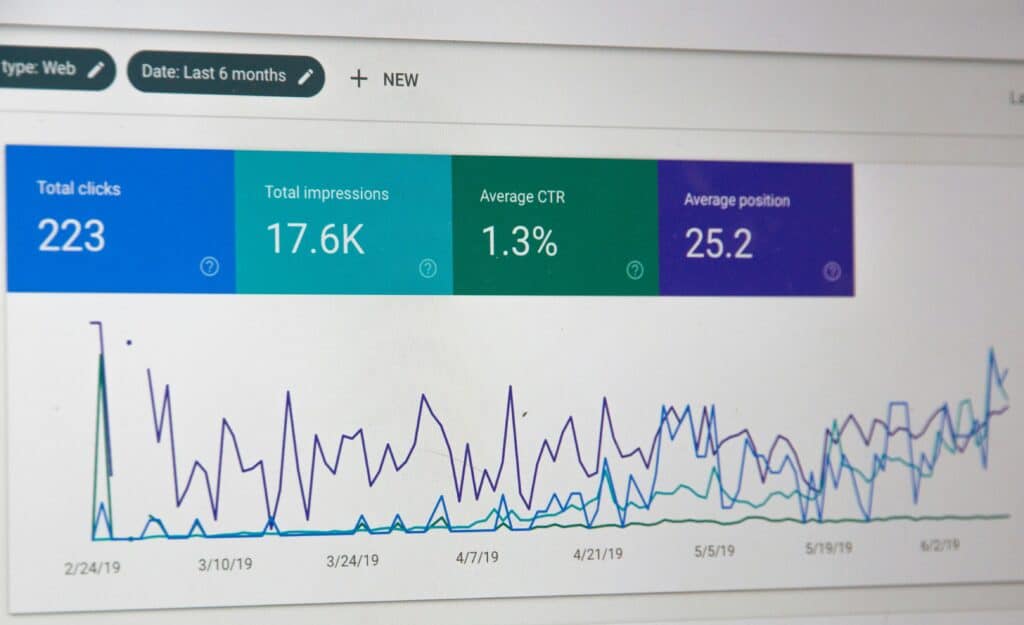
When you hear the words “marketing metrics,” do you suddenly remember ten other *very urgent* tasks you need to address right away? Marketing analytics like impressions, likes, click-throughs, views, and followers shouldn’t be ignored. Digital marketing strategies generate no shortage of numbers, tallies, and percentages, each of which can be just slightly less interesting than watching paint dry. The list of what you should be tracking feels endless and, if you don’t understand their purpose, kind of pointless.
The truth is that many digital marketing tasks can feel like a time burden. That’s why so many business owners choose to outsource their digital marketing. There is some good news, though! For business owners, reviewing this marketing analytics data is valuable and doesn’t have to be difficult.
So, the real question is: Which marketing metrics matter?
Just because you can track a metric doesn’t mean you need to. When it comes to metrics, you need to know which numbers really matter, why they’re important, and how to use them to grow your customer base and increase revenue. With a little help and explanation, marketing metrics can go from a confusing flood of data to a clear stream of information that shows you how to make smarter decisions about your digital marketing.
Why Metrics Matter
The temptation to avoid or ignore digging into your analytic reports will always be there. But those metrics are more than just pretty graphs and charts. They’re indicators that show whether your marketing efforts are generating revenue or losing money for your business.
You may recall earlier iterations of marketing analytics that encouraged businesses to chase “vanity metrics” such as 1,000 likes on a post or 1,000,000 followers on Facebook. There’s no denying that seeing content you’ve created snowball in popularity is exciting. Unfortunately, if that content doesn’t convert into leads or sales, those numbers don’t have any real value. The metrics that truly matter to a business indicate intention.
If you’re not tracking meaningful metrics, you’re making blind guesses as to what and where you should invest your marketing dollars.
What marketing metrics should you track?
Every company is unique, with different goals, sales cycles, and customer relationships, but there are five metrics that most digital marketing strategists consider universal. Taken as a whole, they should provide a clear idea of whether your digital marketing strategy is effective.
1. Customer Acquisition Cost
Your Customer Acquisition Cost (CAC) is the dollar amount required to bring in a new customer. This is a simple but powerful number. Divide your total marketing costs over a time period or campaign by the number of customers gained during that time. Then compare that number to the revenue generated by those customers.
If the CAC is too high in comparison, you know that your digital marketing strategy needs some revision.
2. Customer Lifetime Value
Your CAC shows the cost of acquisition, while Customer Lifetime Value (CLV) shows the long-term value of each customer relationship. This metric looks at not just the initial revenue generated but also the ongoing revenue you’re bringing in from that customer. If the CLV is significantly higher than your CAC, it means your marketing dollars are paying off over time.
One of the most important decisions the CLV can help you make is whether to focus on customer acquisition or retention. If repeat customers spend three times as much as new customers, you should pursue new leads but prioritize customer retention.
3. Conversion Rate
Conversion rate, conversion rate, conversion rate! There’s no denying that conversion rate is one of the most talked-about metrics in digital marketing. Simply put, this metric is the percentage of people who take the desired action after interacting with your digital marketing. Whether you’ve asked the potential customer to schedule a discovery call, download a lead magnet, or purchase your product, this is the audience segment that responded positively to your strategy.

Your conversion rate is the most telling indicator of how persuasive and effective your messaging is. A low conversion rate can mean your messaging is muddled with too many calls to action, your website isn’t user-friendly, or that you’re not reaching your ideal audience.
4. Lead Quality
Lead quality is not to be confused with lead generation. Lead quality often gets forgotten in the rush to collect as many leads as possible. As with the vanity metrics, watching as hundreds of leads pour in during a campaign can be exhilarating. But if a few of those leads are actually potential customers, that overwhelming number means nothing. To sell your product or service, you need qualified leads that are likely to convert from potential to paying customers.
You can measure lead quality through a customer management system that scores leads on how far they move through your sales funnel or by looking at sales conversion data. Your sales team can provide anecdotal feedback as well, but taking the time to dig into the actual numbers is preferable.
5. Return on Investment (ROI)
The final core metric you should be frequently reviewing for your business is the monetary outcome of the work you’re putting in. In this case, you want to answer the question, “Is your digital marketing strategy actually paying off?” by specifically looking at your Return on Marketing Investment (ROMI).
The math is simple. If you invest $2,500 in a Facebook marketing campaign and it only generates $500 in revenue, your ROMI is poor. You need to stop and re-evaluate your campaigns before you invest any more money. But if you invest $2,500 in that same campaign and it generates $5,000, your ROMI is strong. You can rest assured you’re doing digital marketing right. Just like reading, monitoring this metric is fundamental because you can directly connect spending to income, making it clear what strategies are valuable and which have to be revamped.
Overall, even if you’re feeling marketing metric averse, understanding your CAC, CLV, conversion rate, lead quality, and ROMI is necessary for the health of your business. Taken together, they show not only how many people you’re reaching but also whether you’re reaching the right audience, moving them through your sales funnel, and generating enough revenue to support your company.
Three new metrics to consider
As always, marketing tactics are never static. Digital marketing has to appeal to humans and means that it must constantly change and adapt to appeal to the sophistication and whims of buyers. In response, new metrics are developed. As technology advances, those metrics must be integrated into your marketing reports and considered in your strategy.
1. Artificial intelligence predicts the future
AI is having an impact on digital marketing reporting, as it is in almost every aspect of life. Today, rather than being limited to analyzing past data, marketers can use AI to analyze customer behavior for patterns and predict future actions. Access to this type of information lets you make decisions that capitalize on shifting markets quickly and efficiently.
2. Social listening is still relevant

The concept of social listening has been an established tactic for over a decade but is becoming increasingly relevant to modern marketing. Tracking customer sentiment and brand perception matters now more than ever. With the exchange of information being so quick and decisive these days, any negativity around your business that is left unaddressed can damage your company’s reputation permanently.
At the same time, not taking advantage of positive sentiment is a missed opportunity. You need the ability to analyze company reviews, ratings, and social media mentions to understand how customers feel about your company.
3. Environment, social, and governance matters
Business considerations around environmental, social, and governance (ESG) matters are becoming more significant as millennials and Generation Z become high-impact consumers. These two generational cohorts are pushing purchasing decisions beyond traditional considerations like product pricing and suitability. Purchase factors can now include whether a company is aligned with the customer’s principles, ethics, and morals. Metrics that track and measure how your business communicates your brand values will only become more influential over the next few years.
Using marketing analytics in decision-making
“Analysis paralysis” isn’t just a clever and pithy phrase. Collecting data is useless if you aren’t able to apply what you’ve learned to your marketing decisions and then take action. This saying accurately describes what can happen when you’re overwhelmed by too much information and have no way to translate it into improvements to your digital marketing strategy.
To use metrics in a healthy way and avoid analysis paralysis, commit to regularly reviewing your marketing reports, return to the goals you set in your digital marketing strategy, and reconcile the two. You’ll have greater confidence in your marketing, a fuller understanding of what’s working and what’s not, and most importantly, a growing revenue stream.
Need help understanding your marketing metrics? Talk with one of our marketing experts today!